


























Advertisement
Babylirious
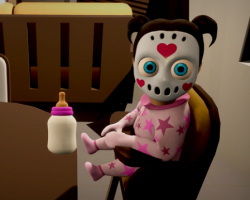
Babylirious is a first-person horror simulation game that places the player in a confined house where they are tasked with taking care of a baby. The experience begins with simple instructions and clear objectives, creating a sense of routine and familiarity. Players move through rooms, interact with household objects, and complete caretaking tasks that appear ordinary at first. As time passes, the environment starts to behave inconsistently, and the player is forced to question what is actually happening inside the house.
Routine Care And Player Interaction
At the start of Babylirious, gameplay is structured around basic actions such as feeding the baby, changing diapers, and placing it in specific locations. These tasks introduce the control scheme and establish expectations. Interaction is limited to picking up objects, opening doors, and responding to prompts. There is no freedom to ignore tasks, which keeps the player focused on following instructions. This structured routine forms the foundation for later changes in gameplay flow.
Environmental Changes And Progression
As the game continues, the house begins to change in noticeable ways. Rooms may look different when revisited, objects may appear in unexpected places, and sounds may signal unseen events. The baby itself becomes part of this shift, behaving differently as progression continues. The game does not explain these changes directly, instead relying on visual and spatial cues. Progression happens through scene transitions rather than traditional levels, maintaining a steady forward pace.
Core Gameplay Elements
Babylirious relies on a small number of recurring systems that define the experience:
- First-person movement within a closed environment
- Caretaking tasks that trigger progression
- Environmental changes over time
- Object-based interaction without combat
- Scene-based advancement
These elements remain consistent throughout the game. There are no upgrades, inventories, or branching skill systems. Success is not measured by performance but by completing tasks and observing how the environment responds.
Player Awareness And Decision Making
Decision-making in Babylirious is subtle and often reactive. Players must decide how to respond when tasks no longer produce expected results. Ignoring environmental cues can lead to confusion, while paying attention helps maintain orientation. The game encourages players to slow down and observe rather than rush through objectives. Repetition of tasks with altered outcomes reinforces the sense that rules are changing.
Advertisement


























































Comments