

























Advertisement
Chillas Art Fishing Horror
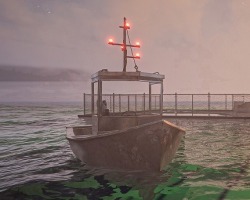
Chillas Art Fishing Horror is a first-person fishing and exploration game developed by Chilla’s Art. The player assumes the role of a lone fisherman operating a small boat in open coastal waters. The main objective is to catch fish using a harpoon, transport them back to port, and sell them to earn money for upgrades. While the structure initially resembles a standard fishing simulator, additional elements gradually introduce psychological tension.
Structure Of The Fishing Loop
The gameplay cycle is built around departure, capture, return, and investment. Players leave the dock with limited fuel and equipment, search for fish in designated zones, and manually aim the harpoon to secure catches. Different fish types generate varying amounts of income. Managing distance from shore is essential, as fuel constraints determine how far the player can travel before needing to return.
Profits are reinvested into boat improvements. Upgrades can increase fuel capacity, strengthen lighting, or improve navigation efficiency. These enhancements expand the accessible area of the ocean. As players move beyond initial zones, environmental conditions become less stable and visibility decreases.
Systems And Gameplay Components
Several systems define progression and player interaction:
- Real-time harpoon fishing mechanics
- In-game economy based on fish sales
- Fuel monitoring and navigation planning
- Equipment upgrades affecting range
- Introduction of irregular marine entities
Each mechanic contributes to a consistent loop that supports exploration while maintaining operational risk.
Integration Of Horror Elements
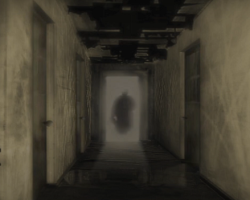
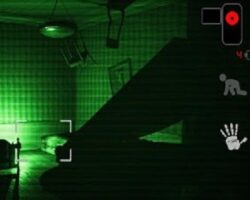
Chillas Art Fishing Horror incorporates horror gradually rather than through constant threat. Fog density, darkness, and open water isolation create an atmosphere of uncertainty. As exploration deepens, some sea creatures display abnormal shapes or unexpected behavior. Visual and audio cues suggest that the environment is not entirely natural.
The game does not rely on extensive dialogue or narrative exposition. Instead, tension emerges from environmental observation and repetition interrupted by anomalies. Routine fishing activities contrast with subtle disturbances, reinforcing a sense of unpredictability. The result is a hybrid experience in which economic management and atmospheric unease coexist within a controlled progression framework.
Advertisement





















































Comments