


























Advertisement
Demon Bluff
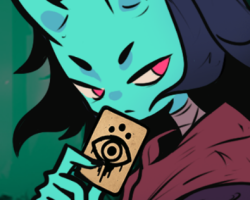
Demon Bluff is a deduction game where the player has to solve a dangerous card table by finding the characters who are hiding their real nature. The game is not built around movement, action combat, or a long campaign. Its main challenge is mental: read what each card says, compare the information, and decide who can be trusted. Every round begins with uncertainty, and the player must turn scattered clues into a clear answer before making an execution.
The Board Tells a Broken Story
Each card in Demon Bluff adds a small piece of information to the round. One character may point toward danger, another may seem to confirm someone’s innocence, and a third may create doubt. The difficulty comes from the fact that the board does not explain itself directly. The player has to rebuild the truth from partial claims, false statements, and role effects. A single clue can look useful at first, then become suspicious after another card is revealed.
Lies Have Their Own Logic
The game does not treat false information as random noise. Lies still follow the structure of the roles, which means they can be studied. If a card gives a statement that cannot fit with the rest of the board, that mistake can expose it. The player needs to think in both directions: what happens if this card is honest, and what happens if it is evil?
A round can involve choices such as:
- deciding which card to reveal next
- checking if two claims can exist together
- finding which role has the most reliable clue
- watching for duplicated or impossible information
- separating weak suspicion from real evidence
- choosing when an execution is safe enough
- managing health after a wrong decision
No Guessing Without Consequences
Demon Bluff creates pressure because every execution matters. The player can make a mistake, but there is not enough space for careless guessing. This makes the game different from a simple quiz. The correct answer is not always visible immediately, and acting too early can ruin a round that could have been solved with one more clue. Patience becomes part of the strategy.
When the Pattern Finally Appears
The most satisfying part of Demon Bluff is the moment when the scattered information starts to connect. A card that looked harmless may suddenly become impossible. A suspicious statement may explain why another clue felt wrong. The best approach is to slow down, compare the roles, and let the table narrow itself. Instead of hunting for one obvious villain, the player builds a case piece by piece until the hidden evil cards have nowhere left to hide.
Advertisement




























































Comments