


























Advertisement
Fears To Fathom Home Alone
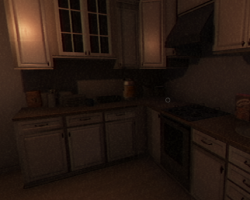
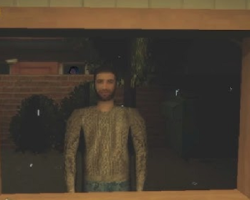
Fears To Fathom Home Alone is a short narrative horror experience focused on a single night inside a residential house. The player controls a young character who is left alone while the rest of the family is away. The game is presented from a first-person perspective, which places emphasis on observation and movement rather than action. There are no weapons or combat systems. Progress depends on interacting with the environment and responding to events as they occur over the course of the night.
Environment and Exploration Design
The playable space in Fears To Fathom Home Alone is limited to a house and its immediate surroundings. Rooms are accessible gradually as the story advances, and each space contains objects that can be examined or used. Exploration is slow and deliberate, with player movement designed to encourage careful inspection rather than fast traversal. Lighting, sound, and object placement guide the player’s attention. Ordinary household locations such as bedrooms and kitchens become central to gameplay as the situation changes over time.
Interaction and Gameplay Flow
Gameplay is built around small interactions that advance the narrative. The player performs everyday actions such as checking doors, using a phone, or interacting with furniture. These actions trigger story events and influence how the night unfolds. The game does not provide explicit instructions at every step, requiring the player to infer what to do next based on context.
Core gameplay interactions include:
- Moving freely through indoor spaces
- Examining and using household objects
- Responding to messages and phone calls
- Making choices during key moments
- Observing changes in the environment
These mechanics support a linear but reactive flow of events.
Narrative Structure and Player Choices
The story in Fears To Fathom Home Alone progresses through a sequence of scripted events that can branch slightly depending on player behavior. Choices are often subtle and may not immediately appear significant. Some decisions affect how scenes play out or which events occur later in the night. The game avoids traditional checkpoints, making the experience feel continuous. The narrative relies on pacing and timing rather than complex plot twists.
Session Length and Replay Design
Fears To Fathom Home Alone is designed to be completed in a single short session. The limited duration allows the game to maintain focus without introducing additional systems or mechanics. Replay value comes from revisiting the experience and making different choices to observe alternate outcomes. Because progression is narrative-based rather than skill-based, repeated playthroughs emphasize understanding cause and effect within the story rather than mastering controls or mechanics.
Advertisement






















































Comments