


























Advertisement
Five Nights at Frickbear’s 4

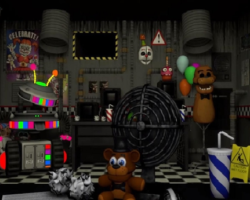
Five Nights At Frickbears 4 is a survival horror game where the player must endure a series of nights while avoiding animatronic threats inside a confined environment. The gameplay builds on earlier entries by introducing more active movement, sound-based mechanics, and increased pressure from multiple enemies. The player is placed in a vulnerable position and must rely on observation, timing, and careful decision-making to survive until morning. The main objective is to complete all nights while adapting to increasingly complex threat patterns.
Core Gameplay And Survival Mechanics
The gameplay in Five Nights At Frickbears 4 focuses on direct interaction with the environment rather than passive monitoring. The player can move between key positions, such as doors or hallways, to detect and respond to incoming threats. Listening for audio cues becomes essential, as enemies often signal their presence through sound rather than visual indicators.
The player must react quickly by using available actions such as closing doors or retreating to safer positions. Mistimed actions can result in immediate failure, making precision and awareness critical for survival.
The system creates a constant state of tension, where decisions must be made under limited information.
The main actions performed during gameplay include:
- Moving between positions to monitor threats
- Listening for audio cues to detect enemies
- Using doors or barriers to block attacks
- Reacting quickly to changing situations
- Surviving until the end of each night
Enemy Behavior And Threat Patterns
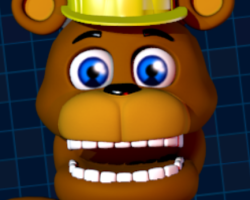
Five Nights At Frickbears 4 includes multiple animatronic enemies, each with distinct movement patterns and behaviors. Some enemies approach slowly and require careful listening, while others act unpredictably and force immediate reactions.
Players must learn how each threat operates and adjust their strategy accordingly. As nights progress, enemies become faster and more aggressive, reducing the time available to respond.
The presence of multiple threats at once creates situations where players must prioritize actions and manage risks carefully.
Environment And Interaction Design
The game environment is structured around a small number of interconnected areas that the player can access. These areas serve as key points for monitoring and defense. Unlike fixed camera systems, the player must physically move to check different directions.
The design emphasizes limited visibility, requiring players to rely on sound and memory rather than constant visual feedback. This approach increases the importance of positioning and timing.
The environment remains consistent, but the way it is used changes as difficulty increases.
Advertisement



























































Comments