























Advertisement
FNAF 4
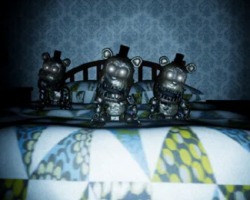
FNAF 4 is a survival horror game built around observation, sound awareness, and limited information. The player experiences events from a fixed position inside a house, where threats appear without clear visual confirmation. Gameplay removes traditional camera systems and replaces them with close-range listening and careful timing. Each night follows a strict structure in which survival depends on recognizing subtle cues and responding correctly before danger escalates.
Night Structure And Player Position
The game is divided into nights that increase in difficulty as new mechanics are introduced. The player remains in a bedroom area and can move between doors, a closet, and the bed. Unlike earlier entries, threats approach from very close distances, forcing the player to react quickly. Visual feedback is limited, so the player must rely on light usage and sound patterns to determine what action is required. Each night ends only if the player successfully survives until morning.
Sound-Based Gameplay And Attention
Sound plays a central role in FNAF 4. Players must listen carefully for breathing, movement, or silence to decide their next step. Acting too early or too late can result in failure. The absence of constant visual confirmation increases uncertainty, making attention and patience critical. The game encourages players to pause and assess before reacting, rather than relying on constant interaction.
Core Gameplay Mechanics
FNAF 4 is structured around a set of recurring mechanics that define each night:
- Listening for audio cues at doorways
- Using limited light to check surroundings
- Closing doors based on sound feedback
- Monitoring the bed and closet for changes
- Surviving a fixed time period per night
These mechanics remain consistent, but their timing and combination become more demanding over time. Mastery comes from learning how long to wait and when to act, not from memorizing fixed patterns.
Difficulty Progression And Learning
As nights progress, reaction windows become shorter and distractions increase. New threats require the player to divide attention between multiple points. Mistakes often come from misinterpreting sounds or acting out of habit rather than observation. Each failure provides information that can be applied in the next attempt, reinforcing learning through repetition rather than explanation.
Advertisement













































Comments