
























Advertisement
Geometry Vibes Unblocked
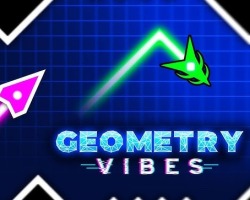
Geometry Vibes Unblocked is a rhythm-based arcade game that focuses on precision, timing, and continuous movement. The player controls a geometric figure that moves automatically across the screen while avoiding obstacles placed in rhythmic patterns. The challenge lies in maintaining control as the level progresses, requiring attention to timing rather than complex inputs. The game emphasizes repetition and improvement, encouraging players to refine their reactions with each attempt.
Movement and Control System
The gameplay relies on a simple control scheme where a single input adjusts the vertical movement of the character. Gravity constantly pulls the object downward, and the player must respond by pressing or holding the control at the right moment. Because movement is continuous, even small mistakes can result in failure. This design keeps the focus on rhythm and consistency rather than speed or reaction time alone. Each level is designed so that success depends on understanding how movement responds to input across different tempos.
Over time, players begin to recognize patterns within the level structure. This familiarity allows smoother navigation and better anticipation of upcoming obstacles. The absence of complex mechanics makes the learning curve clear and predictable.
Level Design and Rhythm
Levels in Geometry Vibes Unblocked are built around synchronization with music. Obstacles appear in time with the soundtrack, creating a link between sound and motion. Visual elements are minimal, ensuring that the player can focus entirely on positioning and timing. As difficulty increases, spacing becomes tighter and movement speed increases, demanding higher concentration.
Midway through gameplay, players encounter several recurring features:
- Repeating obstacle patterns tied to rhythm
- Narrow passages requiring precise control
- Gradual speed increases
- Visual cues aligned with musical beats
- Continuous forward motion without pauses
These elements create a structured challenge where progress depends on learning and consistency rather than chance.
Difficulty Curve and Learning Process
The difficulty rises gradually, allowing players to adapt to new mechanics step by step. There are no shortcuts or power-ups, which means improvement comes only through practice. Each failure provides information about timing and positioning, encouraging players to try again with better control. This approach makes success feel earned rather than accidental.
Advertisement













































Comments