

























Advertisement
Gretel & Hansel Remake
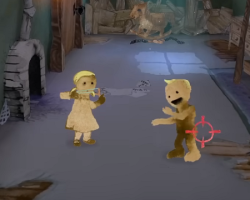
Gretel & Hansel Remake is structured as a point-and-click adventure that relies on spatial logic and rule-based interaction rather than fast decision-making. The player controls Gretel while indirectly managing Hansel’s presence, creating a dynamic where actions must account for two characters within confined scenes. The remake consolidates earlier episodic releases into a single progression path, allowing mechanics and narrative elements to develop without interruption. This structure emphasizes continuity and reinforces the sense that each area exists as part of a larger, interconnected system.
Scene Design and Environmental Flow
Each location is designed as a closed environment with a limited number of interactive elements. Rather than presenting clear objectives, the game expects the player to infer goals through visual arrangement and repeated interaction. Certain objects appear neutral at first but gain function once specific conditions are met. Movement between scenes is deliberately restricted, which keeps focus on problem-solving within a defined space instead of exploration across large maps.
Systems, Rules, and Failure States
Progression depends on understanding how the game interprets player behavior. Actions are often reversible, but their outcomes may change future interactions. Failure is integrated into the system as a method of discovery rather than a reset condition. Core gameplay systems include:
- contextual object interaction based on scene state
- delayed consequences triggered after repeated actions
- environmental hazards that modify available options
- dependency mechanics tied to Hansel’s position
- alternative outcomes revealed through incorrect choices
These systems require players to test assumptions and adjust strategies based on observed results.
Visual Structure and Feedback
The remake uses layered 2D artwork to define depth and interaction zones. Visual feedback replaces conventional interface elements, with subtle animation changes indicating when an object has entered a different state. Color contrast is used sparingly and typically signals interaction relevance rather than narrative emphasis. This approach keeps attention within the scene and reduces reliance on external indicators or text prompts.
Narrative Function and Player Interpretation
Story progression is embedded in mechanical outcomes rather than explicit exposition. Events unfold through cause-and-effect relationships tied to player input, and character development is communicated through behavior instead of dialogue. Gretel’s role as the active agent contrasts with Hansel’s reactive presence, reinforcing narrative themes through gameplay structure. The remake preserves this indirect storytelling method while extending it across a more cohesive timeline.
Advertisement
























































Comments