
























Advertisement
House of Hazards
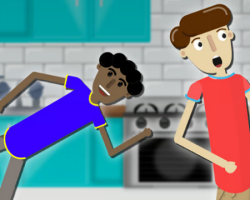
House of Hazards is a multiplayer party game where players try to complete everyday household tasks while avoiding traps activated by other players. The gameplay focuses on timing, quick reactions, and chaotic physics-based interactions inside a dangerous house filled with hazards. Players move through kitchens, bathrooms, gardens, and living rooms while dodging flying objects, collapsing lights, swinging doors, and other traps designed to interrupt simple activities.
Completing Tasks Inside a Dangerous House
The gameplay in House of Hazards revolves around finishing household objectives before other players stop you. Tasks include making coffee, watering plants, brushing teeth, checking the mailbox, and moving objects around the house. While one player attempts to complete objectives, other players can activate traps placed throughout the environment to slow them down or knock them over.
The game does not contain a traditional story campaign or level-based narrative progression. Instead, matches are structured around short competitive rounds where players race to finish tasks faster than everyone else. Each round becomes more chaotic as players learn trap locations and begin predicting each other’s movements around the house.
Traps, Physics, and Multiplayer Chaos
House of Hazards contains multiple rooms connected through interactive hazards and physics-based mechanics. Different traps activate depending on the room, including falling lamps, flying toast, moving cabinets, laser beams, and water sprays. Players can also grab opponents, throw them into obstacles, or lock them inside containers during matches.
The game includes several gameplay features:
- Local multiplayer gameplay for up to four players
- Physics-based movement and ragdoll effects
- Interactive household traps and hazards
- Competitive task-completion objectives
- Unlockable characters and cosmetics
- Different gameplay modifiers and challenge effects
Some rounds also introduce random gameplay modifiers that change movement, controls, or hazard behavior, making matches less predictable and forcing players to adapt quickly.
Learning Timing and Trap Placement
To play House of Hazards, the player moves around the house while trying to complete assigned tasks without getting interrupted by hazards or opponents. Timing becomes important because many traps activate suddenly and can knock players down or block important pathways.
Advertisement






















































Comments