


























Advertisement
Juice Galaxy Formerly Juice World
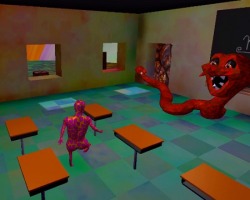
Juice Galaxy Formerly Juice World is an open-world exploration game where the player navigates surreal environments and interacts with physics-based systems. The game places the player in a flexible sandbox space without strict objectives, allowing free movement across different terrains. The main focus is on exploration, experimentation, and interaction with objects and characters that follow unconventional rules.
Open World Structure And Movement
The game features a large interconnected world composed of unusual landscapes and structures. Players can move freely between areas, climb surfaces, and traverse spaces without predefined paths. Movement is supported by physics-based mechanics, which means that momentum and positioning influence how the player interacts with the environment.
There are no fixed missions guiding progression. Instead, players decide where to go and what to explore. This structure encourages curiosity and experimentation rather than linear completion.
Navigation often involves discovering hidden paths, vertical routes, and interconnected zones that expand the playable space.
The main actions performed during gameplay include:
- Exploring different areas of the world
- Interacting with objects using physics
- Climbing and traversing terrain
- Engaging with characters or entities
- Discovering new locations and pathways
Combat And Interaction Systems
Juice Galaxy Formerly Juice World includes optional combat elements that rely on physics rather than traditional mechanics. Players can engage with enemies using movement, positioning, and environmental interaction. Encounters are not always required, allowing players to avoid or approach them depending on preference.
The interaction system extends beyond combat. Objects in the environment can be manipulated, moved, or used in unexpected ways. This creates situations where outcomes depend on how the player experiments with available tools and space.
The system supports flexible playstyles, where players can choose exploration, interaction, or engagement.
Environment Design And Style
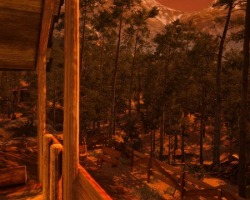
The environments are constructed with abstract forms and non-standard proportions. Terrain may include floating structures, irregular shapes, and spaces that do not follow typical design rules. This affects how players move and interpret the environment.
Visual elements are used to distinguish areas and guide exploration, even without explicit instructions. The design encourages observation, as landmarks and structures help players navigate the world.
The environment plays a central role in defining gameplay, as interaction is directly tied to spatial design.
Advertisement





















































Comments