


























Advertisement
Minecraft Old Versions
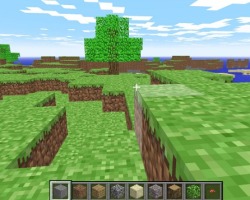
Minecraft Old Versions refers to earlier builds of Minecraft that were released during initial development phases, including Classic, Indev, Infdev, Alpha, and Beta. These versions provide a simplified form of the game where many modern systems are either absent or incomplete. The main objective remains the same as in later releases: gather resources, build structures, and survive in a procedurally generated environment. However, the mechanics are more limited, which changes how players approach gameplay.
Core Mechanics And Early Gameplay
In Minecraft Old Versions, gameplay is centered around basic survival and building systems. Players begin by collecting essential resources such as wood and stone, which are used to craft tools and simple structures. The crafting system is more restricted, offering fewer recipes and options compared to later versions.
There is less guidance, so players must rely on experimentation to understand mechanics. The absence of advanced features creates a direct experience where each action has a clear purpose.
The early gameplay loop focuses on gathering, crafting, and constructing without additional layers of complexity.
The main actions performed during gameplay include:
- Collecting resources from the environment
- Crafting basic tools and items
- Building shelters and simple structures
- Exploring terrain for materials
- Surviving against environmental threats
Differences From Modern Releases
Minecraft Old Versions differ significantly from current versions in terms of content and systems. Many features such as advanced mobs, complex redstone mechanics, and diverse biomes are either missing or in early stages.
Combat is simpler, with fewer enemy types and limited behavior patterns. The interface is also less developed, offering fewer customization and accessibility options. These differences result in slower progression and a more focused gameplay experience.
Technical limitations are also present, including bugs or unfinished features that were later improved.
World Generation And Exploration
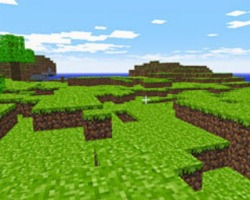
World generation in Minecraft Old Versions is less refined. Terrain may appear uneven or repetitive, with fewer environmental variations. Despite this, exploration remains an important part of the gameplay loop.
Players must search for resources and suitable building locations, often adapting to irregular landscapes. The lack of structured objectives allows players to define their own goals, whether it is building, mining, or exploring.
The environment plays a central role, as it directly affects available resources and movement.
Advertisement





















































Comments