


























Advertisement
My Dystopian Robot Girlfriend
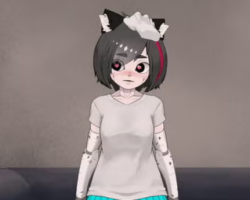
My Dystopian Robot Girlfriend is a narrative-driven visual novel centered on interaction, dialogue choices, and relationship development in a controlled setting. The player follows a linear story structure where progress is made through reading scenes and selecting responses during conversations. Gameplay does not involve movement or mechanical challenges, instead focusing on how dialogue decisions affect later scenes. Each play session advances through a sequence of story segments tied to character interaction.
Setting And Narrative Framework
The game is set in a dystopian environment where human life is shaped by advanced technology and strict social systems. The player’s role is defined through interaction with a robotic character, and the story unfolds through daily conversations and shared situations. Information about the world is revealed gradually through dialogue rather than exposition. The narrative is structured to keep focus on personal interaction rather than large-scale events, allowing the setting to act as background context.
Dialogue Choices And Player Influence
Player input in My Dystopian Robot Girlfriend is limited to choosing dialogue options at specific points. These choices influence how the robotic character responds and how the relationship develops over time. Some responses lead to different scenes or alter the tone of future interactions. The game does not clearly indicate which options are correct, encouraging players to consider responses carefully rather than optimizing outcomes.
Core Gameplay Structure
The experience is built around several repeating gameplay elements:
- Text-based story progression
- Dialogue choices with branching outcomes
- Character-focused scenes without exploration
- Relationship tracking through responses
- Save and reload options for replay
These elements remain consistent throughout the game. There are no upgrades or alternative gameplay modes, so engagement comes from narrative variation rather than mechanical depth.
Scenes are presented using static backgrounds, character portraits, and text windows. Visual changes signal shifts in mood or progression but do not function as gameplay mechanics. Scene transitions are handled through dialogue completion rather than player movement. This structure keeps pacing steady and allows players to progress at their own reading speed without external pressure.
Advertisement


























































Comments