
























Advertisement
Project: GLUTT
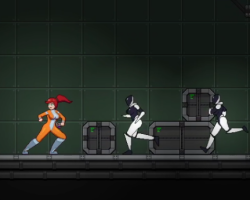
Project GLUTT is a side-scrolling action game focused on exploration, movement, and state-based progression. The player controls a creature navigating a closed industrial environment composed of corridors, shafts, and interconnected rooms. Advancement is not guided by explicit objectives but by the player’s ability to understand how the character’s condition affects interaction with the world. Progress emerges through repeated exploration and experimentation rather than linear stage completion.
World Layout and Exploration Logic
The game world is structured as a continuous map where areas loop back into one another. Navigation depends on spatial awareness, as many routes are initially inaccessible and only become reachable after changes in the character’s abilities. Vertical movement plays an important role, with ladders, drops, and narrow passages shaping how the player moves through space. Backtracking is a core element, encouraging players to reassess familiar locations once conditions have changed.
Core Systems and Player Interaction
Project GLUTT revolves around a small set of mechanics that interact with each other over time. Combat, movement, and growth are not isolated systems but are closely linked. Enemies function as both obstacles and resources, forcing players to decide how to approach each encounter. Central gameplay systems include:
- platform-based movement across horizontal and vertical spaces
- enemy encounters that can be avoided or engaged
- consumption mechanics that alter size or ability
- non-linear access to areas based on character state
- revisiting earlier zones with modified capabilities
These systems create a loop where choices directly influence mobility and access rather than simply increasing strength.
Risk Management and Adaptation
Player decisions in Project GLUTT often involve trade-offs. Consuming enemies may provide new abilities or access to blocked paths, but it can also introduce limitations that affect movement or precision. Avoiding combat can preserve control but may delay progress. This balance requires players to adapt strategies based on the current environment rather than relying on a single optimal approach. Learning when to change tactics is central to long-term progression.
Visual Structure and Environmental Feedback
The visual presentation uses a clear 2D perspective that emphasizes readability of space. Environments communicate function through layout rather than interface markers. Enemy behavior, hazards, and traversal routes are readable through animation and positioning. Feedback is delivered through changes in movement, reach, or interaction range instead of numerical indicators, keeping focus on spatial reasoning.
Advertisement



















































Comments