


























Advertisement
Project PITT
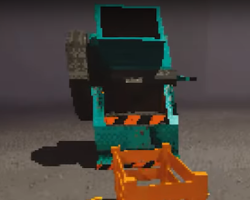
Project PITT is a first-person horror game built around exploration, spatial awareness, and environmental response. The player enters a confined underground structure with no clear explanation of its purpose or layout. Progress is achieved by moving through interconnected spaces, observing changes, and reacting to subtle cues rather than following explicit objectives. The game limits direct interaction, placing emphasis on perception and memory as primary tools for survival.
Environment Layout and Exploration Flow
The setting is designed as a closed system composed of corridors, chambers, and access points that loop back into one another. There are no maps or navigation aids, requiring the player to remember paths and landmarks. Lighting and sound play an important role in guiding movement, as certain areas signal danger or progression through small environmental changes. Exploration is deliberately paced, discouraging rushed movement and rewarding careful observation of surroundings.
Interaction Model and Player Actions
Player actions in Project PITT are minimal and context-dependent. Instead of collecting large inventories or managing complex mechanics, the player interacts with specific elements when conditions allow it. Many interactions are indirect, meaning their effects are only visible later. The core interaction structure includes:
- navigating dark or restricted spaces
- activating environmental elements at specific moments
- responding to changes in lighting or sound
- locating access tools that alter traversal options
- triggering progression through spatial positioning
These actions form a loop where observation informs movement, and movement reveals new information.
Audio Design and Environmental Signals
Sound is used as a functional system rather than background atmosphere. Mechanical noises, ambient hums, and abrupt silences provide information about nearby spaces and system states. Audio cues often replace visual indicators, forcing the player to listen closely while moving. This design encourages slower exploration and reinforces uncertainty, as sound rarely confirms safety outright.
Visual Presentation and Feedback
The visual style focuses on clarity of structure rather than detail density. Environments are readable, with geometry and lighting defining navigable areas. Visual feedback is subtle and often limited to changes in illumination, object placement, or corridor visibility. Interface elements are minimal, keeping attention on the environment itself. The absence of constant visual prompts reinforces immersion and increases reliance on player awareness.
Advertisement

























































Comments