


























Advertisement
School Locker Practice
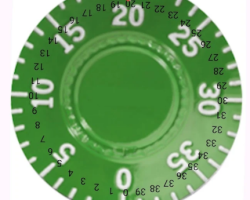
School Locker Practice turns the process of opening a locker into a repeatable digital exercise. The player creates a three-number combination and enters it through an interactive rotary dial. A marker above the dial shows which number is currently selected. The main goal is to learn the order of movements, control the rotation, and complete the code without stopping at the wrong positions.
Setting Up an Exercise
The game contains no story, named characters, dialogue, or narrative conclusion. It is limited to the lock interface and its practice tools. Before starting, players choose between a 0–39 dial and a 0–49 dial. They can then set any three-number combination, including the code of a locker they use at school. The selected numbers remain the objective for that attempt.
Moving Between Code Numbers
Players operate the lock by tracing a circular path around the dial. Dragging to the right produces a clockwise rotation, while dragging in the opposite direction moves it counterclockwise. Instructions on the screen show when to change direction. The numbered dial must be positioned so that every target value reaches the marker in the correct order.
The gameplay sequence involves:
- Select one of the available dial ranges.
- Enter three numbers for the locker combination.
- Rotate clockwise until reaching the first number.
- Move counterclockwise toward the second number.
- Stop when the second value aligns with the marker.
- Turn clockwise again to reach the final value.
- Check the code by attempting to open the lock.
School Locker Practice does not include separate levels, progressive challenges, or different locker rooms. It also has no time limit, score counter, opponents, or reward system. A new task is created by changing the combination rather than advancing to another stage. Players can repeat the same code as many times as needed, making each successful opening part of a self-directed training routine.
Correcting Mistakes Through Practice
Accuracy is easier to develop when the dial is moved slowly during the first few attempts. Players should memorize the three values before beginning and keep track of every directional change. If a number is missed, the exercise can be reset and performed again. Once the sequence becomes familiar, the player can reduce pauses between movements and attempt a faster opening. Success is confirmed when the combination is accepted and the virtual lock opens, showing that all three values were entered in the required sequence.
Advertisement

























































Comments