

























Advertisement
School Party Craft
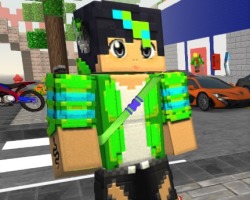
School Party Craft is a sandbox-style mobile game built around exploration, character interaction, and environmental customization. Players are placed inside a large block-based city that functions as the central hub of activity. Instead of following a rigid storyline, the game allows free movement between locations and systems. The environment contains functional buildings, streets, and interactive spaces designed to simulate a social urban setting. From the start, players are encouraged to navigate the world, discover mechanics, and define their own priorities.
Open World Structure
The city operates as a continuous playable area without forced progression gates. Movement is not restricted by mission chains, which means players can immediately explore different districts. Locations serve practical purposes rather than narrative ones. Shops provide access to cosmetic items, vehicles improve mobility, and properties introduce building systems. The world layout supports wandering, resource collection, and experimentation with mechanics. Players can travel on foot or use transport options to move faster between areas.
Character interaction plays a functional role within the simulation. NPCs populate the city and respond to basic player actions. Multiplayer elements introduce real-time encounters with other players. Communication tools allow chatting and simple social engagement. This design shifts the focus away from objectives and toward activity selection. The game structure rewards curiosity rather than task completion.
Core Gameplay Systems
School Party Craft combines multiple mechanics that operate independently but complement each other:
- Free exploration within the city
- Character customization options
- Property acquisition and housing systems
- Block-based construction and decoration
- Vehicle usage for navigation
- Social interaction features
These systems allow players to alternate between movement, building, and communication without a fixed order.
Customization And Building
Personalization is a major component of long-term engagement. Players can modify avatar appearance through clothing and skins. Housing mechanics introduce structural editing, interior decoration, and spatial arrangement. Purchased properties can be redesigned using blocks and furniture items. Objects serve decorative and functional purposes within player-owned spaces. The construction system follows a modular logic where elements can be placed, removed, or repositioned freely.
The building mechanics are not limited to aesthetics. Interior layouts influence how players use personal areas. Furniture placement, room division, and visual structure become part of the gameplay loop. This creates a secondary layer of interaction beyond exploration.
Advertisement















































Comments