


























Advertisement
Stacklands
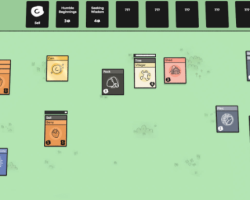
Stacklands is a card-driven strategy game where all actions are performed by arranging and combining cards on a shared board. The player starts with a small set of basic cards, including villagers and simple resources, and gradually expands this system into a working settlement. Each card represents a functional element, and interactions occur when cards are placed together in specific ways. The game does not use traditional menus or units; instead, every process is handled through direct manipulation of cards.
Card System And Interaction Logic
The core mechanic is based on combining cards to produce results. A villager placed on a resource card will begin collecting materials, while stacking certain items together may create new tools or buildings. These interactions are automatic once the correct combination is formed.
There are no explicit instructions for most recipes. Players must experiment with different combinations to discover how the system works. Over time, this leads to a growing set of known interactions that can be used more efficiently.
Economy And Resource Flow
The game includes a continuous resource cycle where materials are gathered, consumed, and transformed. Food must be produced regularly to sustain villagers, while other resources are used to expand production.
Each cycle places pressure on the player to maintain balance. Producing too little food or mismanaging materials can disrupt progress. Efficient organization of cards becomes important, as clutter can slow down interactions and reduce control.
Main Gameplay Elements
- Card-based representation of all gameplay elements
- Combination system that triggers automated actions
- Resource cycles requiring continuous management
- Discovery of recipes through trial and error
- Increasing complexity as new cards are introduced
Threats And System Expansion
As the settlement grows, new elements introduce challenges such as enemies or environmental risks. Combat is handled through card interactions, where villagers equipped with weapons engage threats automatically.
New card packs expand available mechanics, adding layers such as advanced crafting or additional resource types. These expansions increase both opportunity and complexity, requiring adjustments in strategy.
Player Experience And Progression
Stacklands follows an open-ended structure where progress is defined by how the player develops the settlement. There is no fixed storyline or endpoint, and each session can evolve differently based on choices and discoveries.
The experience focuses on learning and optimization. By organizing cards effectively and understanding interactions, players improve efficiency. The game creates a system where progression depends on managing relationships between elements and maintaining stability as complexity increases.
Advertisement























































Comments