


























Advertisement
Taxi Driver VR
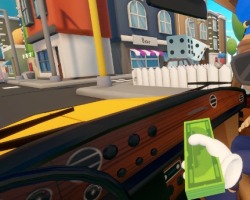
Taxi Driver VR is a virtual reality driving game focused on transporting passengers through a city environment. The player takes the role of a taxi driver and completes rides by following navigation routes, obeying traffic flow, and managing time efficiently. The game is designed to be experienced from a first-person perspective inside the vehicle, which places attention on steering, mirrors, and road awareness. Each session is structured around individual trips rather than long campaigns, allowing flexible playtime.
Driving Environment And Session Structure
The game world in Taxi Driver VR is built as an urban map with intersections, traffic signals, and varying road layouts. Players begin a session by entering the taxi and selecting or receiving a passenger request. Once a destination is set, the route must be followed using in-game navigation tools. Sessions are usually divided into short drives, and each completed ride contributes to overall progress. There are no forced interruptions between trips, which allows players to continue driving as long as they choose.
Controls And VR Interaction
Taxi Driver VR uses motion-based and controller inputs to simulate driving actions. Players steer using virtual controls and interact with elements inside the car, such as dashboards or navigation displays. Head movement is used to check mirrors and surroundings, which adds spatial awareness to driving. Vehicle handling remains consistent, so players can focus on traffic behavior and route planning rather than adjusting to changing mechanics.
Core Gameplay Features
The gameplay in Taxi Driver VR is built around a stable set of features:
- First-person driving view inside the taxi
- Passenger pickup and drop-off tasks
- City traffic with signals and intersections
- Navigation guidance for destinations
- Time-based ride completion
These features define each driving session. Because the rules remain the same, players improve by learning traffic patterns and refining control rather than unlocking advantages. Each ride becomes a short task that tests attention and reaction time.
Decision Making During Rides
Players must constantly decide how to approach traffic situations. Driving too fast can lead to missed turns or collisions, while driving too cautiously may result in late arrivals. Choosing efficient routes helps reduce travel time, especially in dense areas. Attention to surroundings is important, as VR perspective requires active scanning of the road, mirrors, and signals. Small driving mistakes often affect ride outcomes directly.
Taxi Driver VR is designed for repeated play through short, independent driving tasks. After completing a ride, players can immediately accept another request without leaving the session. This structure supports both casual and extended use. Since driving conditions and destinations vary, no two sessions are identical. The game maintains a focused design centered on realistic driving interaction, spatial awareness, and task-based progression within a virtual city setting.
Advertisement



























































Comments