























Advertisement
Tetris
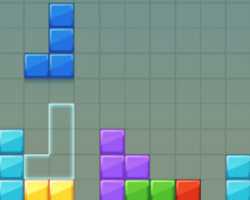
Tetris is a puzzle game based on arranging falling geometric shapes inside a vertical playfield. The player’s task is to rotate and position these shapes so they form complete horizontal lines. When a line is filled, it disappears and creates space for new pieces. The game continues until the stack of shapes reaches the top of the playfield, at which point the session ends. There is no narrative or character progression; the entire experience is built around spatial logic and continuous decision-making.
Gameplay Rules and Piece Behavior
The shapes in Tetris, commonly known as tetrominoes, are composed of four connected blocks arranged in different configurations. Each tetromino falls from the top of the screen at a constant speed that increases as the game progresses. The player can move the piece horizontally, rotate it, or accelerate its descent. Because pieces appear in a sequence that cannot be fully predicted, the player must react to each new shape while also planning ahead. Efficient placement becomes more important as the speed increases.
Scoring and Player Actions
Scoring in Tetris is tied to how efficiently the player clears lines. Clearing multiple lines at once results in higher point values, encouraging careful setup rather than random placement. Some versions introduce bonuses for clearing four lines simultaneously or for performing consecutive line clears without gaps.
Key actions that influence gameplay include:
- Rotating pieces to fit available spaces
- Managing stack height to avoid overflow
- Creating flat surfaces for future pieces
- Clearing multiple lines in a single move
- Adjusting placement speed under pressure
These actions form the core decision loop of every session.
Variations and Adaptations
Over time, Tetris has been adapted into many versions across different platforms. While the basic rules remain consistent, variations introduce new mechanics such as hold queues, preview windows, or alternate scoring systems. Some versions add competitive multiplayer modes, where clearing lines sends obstacles to opponents. Others focus on timed challenges or endless survival formats. Despite these changes, the underlying structure remains recognizable across all adaptations.
Endurance, Skill, and Replay Value
Tetris does not have a final level or completion state. Progress is measured by how long the player can maintain control as speed increases. Skill development comes from improving spatial awareness, reaction time, and planning ability. Because each session depends on piece order and player decisions, no two games are identical. This structure supports repeated play without relying on unlocks, upgrades, or external progression systems.
Advertisement




















































Comments