

























Advertisement
The Deep Sea
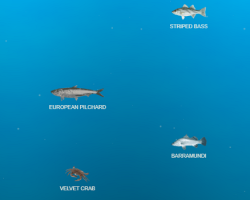
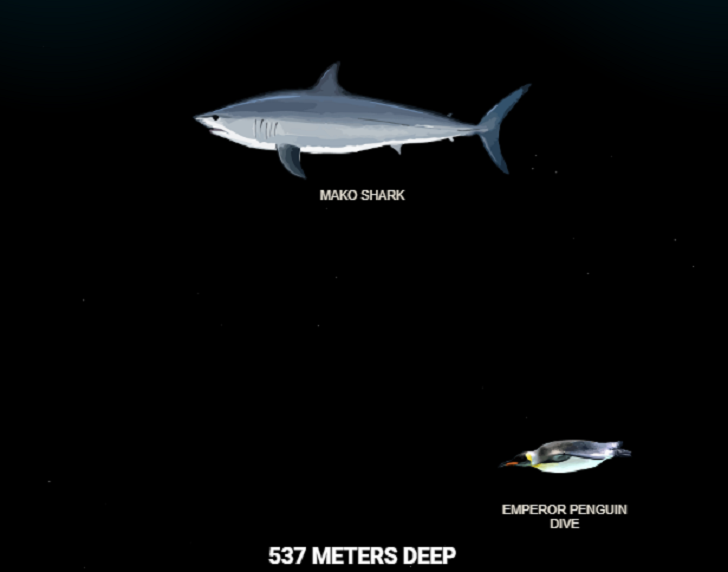
In The Deep Sea, the scroll wheel acts as a control for an underwater descent. The screen starts at sea level, and each downward movement increases the depth counter. Marine species and human-made objects appear according to how far below the surface they can be found. The project was created by Neal Agarwal to present the vertical scale of the ocean in an interactive format.
The Upper Ocean Is Only the Beginning
The first part contains animals that live or hunt relatively close to sunlight, such as dolphins, turtles, sea lions, barracudas, and several shark species. The environment becomes darker as the depth increases. Below the range of sunlight, the selection changes to transparent, bioluminescent, slow-moving, and pressure-adapted organisms. Short notes explain their size, diet, lifespan, appearance, and methods of survival.
Depth Markers Organize the Journey
There are no playable levels in the traditional sense. The Deep Sea divides its content through real depth zones and important underwater records. Users pass the Twilight Zone, Midnight Zone, Abyssal Zone, and Hadal Zone before reaching the Challenger Deep. Each zone introduces different conditions, including reduced light, lower temperatures, increasing pressure, and limited access to food.
The visualization features several types of information:
- maximum diving records of marine mammals and birds;
- depths inhabited by fish, mollusks, crustaceans, and corals;
- facts about bioluminescence and deep-sea feeding;
- positions of shipwrecks and ocean trenches;
- records from human dives and submarine expeditions.
No Character, Combat, or Failure
Gameplay consists entirely of scrolling and reading. The user does not control a submarine, manage oxygen, avoid predators, or collect specimens. It is possible to stop at any depth, examine the illustrations, and continue when ready. Moving upward returns to previously viewed content. Because there is no score or timer, the descent can be completed quickly or treated as a longer educational tour.
The later sections include the Titanic at approximately 3,800 meters, the wreck of USS Johnston, hydrothermal-vent communities, and organisms that survive in ocean trenches. Near the bottom, the project recounts the 1960 Trieste expedition by Jacques Piccard and Don Walsh. Their submarine reached the Challenger Deep after a descent lasting several hours. This account forms the conclusion of The Deep Sea, connecting the scale of the ocean with one of the earliest human journeys to its deepest known point.
Advertisement


























































Comments