


























Advertisement
The Floor Above
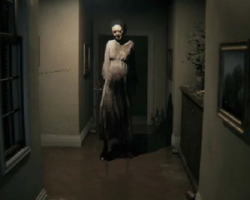
The Floor Above is a short-form horror experience centered on pattern recognition and controlled observation. The player is placed inside a repeating interior space and must evaluate whether each version of the environment is safe. The design avoids complex movement systems and instead emphasizes visual attention, timing, and consistency in decision-making. Progress depends on recognizing small changes rather than interacting with objects directly.
Observation And Decision Loop
The core mechanic is built around a binary choice system. Each time the room resets, the player must decide whether what they see contains an anomaly or remains unchanged. This decision determines whether they advance or restart. The process repeats across multiple cycles, requiring continuous concentration. The game gradually increases difficulty by introducing subtle variations that are harder to distinguish from the baseline environment.
Blinking is used as a supporting mechanic to confirm visual inconsistencies. It allows the player to test whether certain elements persist or disappear, acting as a simple validation tool. Because the room appears similar in every cycle, even minor changes become significant, forcing the player to rely on memory and comparison rather than reaction speed.
Progression System
Advancement in The Floor Above is structured as a sequence of correct decisions. Each correct evaluation moves the player forward, simulating movement between floors. A mistake interrupts the sequence and may reset progress, depending on the stage reached. This system creates a consistent loop where success is based on accuracy over time rather than exploration or combat.
The game includes several structured elements:
- Repeating room layouts with incremental changes
- A sequence-based progression tied to correct choices
- Increasing anomaly complexity over time
- Multiple outcomes depending on performance
- Environmental storytelling through visual details
Narrative Delivery
The story is not presented through direct exposition. Instead, The Floor Above uses environmental changes, sound cues, and fragmented dialogue to communicate context. Each loop can reveal small narrative details, which combine over time into a broader interpretation of events. The player is expected to piece together information without explicit guidance.
Constraints And Design Focus
The game limits physical interaction and restricts the player to a fixed position. This design removes traditional exploration and shifts attention entirely to observation. As a result, the experience becomes focused on perception and cognitive processing. The absence of complex controls or navigation systems reduces distractions and maintains a consistent gameplay rhythm.
Advertisement






















































Comments