


























Advertisement
Track Star
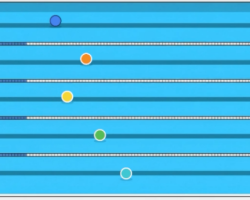
Track Star turns four athletics disciplines into a short competition where small timing mistakes can have a large effect on the final result. There is no story, upgrade system, or long campaign. The player selects a country, enters each event, and tries to meet the required standard through fast input and accurate jumps. Performance is measured directly through sprint times and jump distances, so the main form of progress is learning the controls well enough to improve previous results.
Start With Pure Speed
Running is controlled by rapidly alternating the Left and Right Arrow keys. The faster the rhythm, the more speed the athlete builds. In the 100 Meter Sprint, there is no extra mechanic to manage, which makes it the clearest test of how consistently the player can maintain the running input from the starting line to the finish.
The competition includes:
- 100 Meter Sprint;
- 110 Meter Hurdles;
- Triple Jump;
- Long Jump.
Each event uses the same basic controls differently. That makes the transition between disciplines important, because a rhythm that works well in the sprint may need to be adjusted immediately when jumping is introduced.
Add Timing to the Run
The 110 Meter Hurdles combines speed with repeated Spacebar presses. Players need to clear every barrier without losing too much momentum. A late jump can cause contact with a hurdle, while an early one may interrupt the pace before the next obstacle.
Triple Jump is more complex because several takeoffs happen in sequence. The player must carry speed into the first jump, then time the following phases so that the athlete keeps moving forward efficiently. A poor first phase reduces the total distance before the final landing.
Long Jump uses only one takeoff, but accuracy at the line becomes the key factor. A fast approach helps, yet jumping too early sacrifices distance and waiting too long can ruin the attempt.
Improve the Full Competition
Track Star does not use conventional levels, but the four-event order provides a clear structure from start to finish. The challenge comes from switching between different types of input without losing consistency.
Strong results require separate skills: rapid alternating presses for the sprint, repeated jump timing for hurdles, and precise takeoffs for the jumping events. Replaying the competition helps players understand where they are losing time or distance. A better overall performance usually comes from improving the weakest event rather than only trying to set another sprint record.
Advertisement



























































Comments