





















Advertisement
Trees Hate You
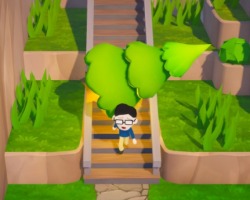
Trees Hate You is a third-person obstacle-based game where the player moves through a forest that actively works against progression. The objective is to follow a path and reach the end, but the environment constantly interferes with movement. What appears to be a simple walk quickly turns into a sequence of interruptions caused by hidden triggers and misleading visual cues. The gameplay is structured around repeated attempts, where each failure provides information about how the environment behaves.
Core Gameplay And Navigation
The player controls a character moving along narrow paths surrounded by trees and natural obstacles. Movement is limited to basic directional input, but the simplicity of controls contrasts with the unpredictability of the environment. Objects that seem static may suddenly move, block the path, or cause the character to fall. Because of this, navigation requires careful observation rather than speed. Players must slow down, analyze surroundings, and anticipate changes before moving forward.
Trap Design And Player Reaction
The forest is filled with traps designed to break player expectations. Many obstacles are triggered by proximity or movement, activating only when the player reaches a specific point. Some hazards repeat in patterns, while others appear once and do not occur again. This creates a system where learning through failure becomes necessary. The player gradually builds knowledge about how certain elements behave and uses that information to progress further in later attempts.
The main gameplay loop includes:
- moving along forest paths toward the objective
- triggering and reacting to hidden traps
- memorizing hazard patterns
- retrying sections after failure
- advancing through repeated attempts
Systems And Environmental Feedback
The game does not rely on complex interfaces or guidance systems. Instead, all feedback is delivered through the environment itself. Movement interruptions, sound cues, and visual changes signal when a trap has been activated or avoided. There are no maps or indicators, so players must rely on memory and attention. This design keeps the focus on direct interaction with the environment rather than external systems.
Structure And Replayability
Trees Hate You is designed for short sessions with high repetition. The path remains consistent, but player performance improves with experience. Replayability comes from refining reactions and reducing mistakes rather than discovering new areas. Each attempt allows the player to move slightly further by applying what was learned previously.
Advertisement










































Comments