

























Advertisement
VHOLUME
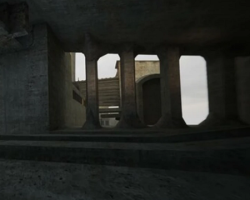
Crossing a decaying capital becomes a bureaucratic journey in VHOLUME, where Robert is trying to recover the ration tickets that were taken from his family. The city belongs to a dystopian Afro-Eurasia controlled by an all-powerful Ministry, and reaching the necessary offices requires much more than simply walking through the streets. Robert travels through enormous concrete structures, neglected residential areas, industrial spaces, tunnels, and other sections of the capital while the story develops around his attempts to deal with the system.
Move Through the City
Movement is the central mechanic. Robert can run, jump, climb, and slide, and these actions can be connected together to maintain speed. Levels are designed with multiple elevations, narrow passages, gaps, walls, and alternative routes. Momentum matters, especially when trying to cross large spaces efficiently. Players can follow an obvious path at first, then begin experimenting with jumps and shortcuts once they understand how different surfaces and structures connect.
Explore Different Levels
The campaign contains a large sequence of parkour levels that gradually take Robert through different parts of the city. Some sections focus on residential buildings and administrative areas, while later routes lead underground or through increasingly unusual environments. There are also optional B-Side stages that provide modified or completely different versions of the movement challenges.
Areas and level types include:
- condominium and apartment complexes;
- Ministry administrative spaces;
- sewers and underground passages;
- mechanical and industrial structures;
- overgrown jungle sections;
- a large dam;
- offices and shower areas;
- a fairground and other city districts.
Each environment changes the way the player reads the route. Some levels emphasize vertical climbing, while others provide long stretches where preserving momentum becomes more important.
The first completion of a level does not have to be the fastest one. VHOLUME encourages players to return and search for better routes after learning the layout. Hidden shortcuts can bypass sections of the intended path, while collectibles provide another reason to investigate corners and unusual structures. Finding certain collectibles also opens B-Side content, adding extra challenges beyond the main route.
Improve Every Run
Levels include target times, turning familiar areas into time-trial challenges once the basic route has been learned. Players can compare their movement against visible ghosts, observe how another run approaches a section, and use that information to discover faster techniques. Levels can also be crossed together with other players, allowing several people to navigate the same parkour spaces at once. Progress therefore combines the story of Robert’s bureaucratic journey with exploration, movement mastery, collectibles, optional stages, shortcuts, and repeated attempts to complete each route more efficiently.
Advertisement























































Comments