





















Advertisement
Weavesilk
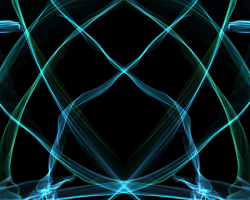
Weavesilk presents a digital environment where visual patterns emerge directly from user movement. The experience begins immediately, without setup screens or instructions, allowing interaction to start as soon as input is detected. Lines are generated in real time and reflected across multiple axes, forming symmetrical structures that evolve with every gesture. There are no objectives or measurements, and interaction is not evaluated or compared, which places focus entirely on the process rather than outcomes.
Motion And System Response
The system is built around a direct relationship between motion and visual output. When the user moves across the screen, the application mirrors that movement according to the selected symmetry rules. Changes in speed, direction, and continuity alter the resulting pattern in predictable ways. The response is immediate, with no delay between action and result. This creates a controlled environment where experimentation is guided by observation rather than instruction.
Parameter Adjustment And Control
Weavesilk includes a limited set of adjustable parameters that affect how lines appear and behave. These options are available at all times and can be modified during active interaction. Adjustments do not interrupt the drawing process and do not require confirmation steps. The system avoids hidden settings, keeping all controls visible and reversible.
During typical use, interaction revolves around a few repeated actions:
- selecting or changing symmetry modes
- adjusting line behavior and visual response
- clearing the canvas to reset the space
- modifying input sensitivity
These actions define the full scope of control and remain consistent across sessions.
Session Structure And Continuity
Each session exists independently, with no saved progress or accumulated state. Closing and reopening the application does not alter available features or starting conditions. This structure ensures that every interaction begins from the same baseline, regardless of previous use. The absence of progression systems removes pressure to achieve specific results and allows users to engage for any length of time.
The interface is minimal and places emphasis on the canvas. Controls are positioned to avoid overlapping with the drawing area, keeping visual output unobstructed. There are no text prompts, alerts, or indicators that guide behavior. All feedback is delivered through changes in form and color, reinforcing a consistent loop of action and response.
Advertisement




















































Comments