























Advertisement
Find a Scrabble
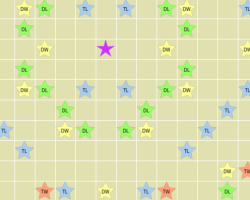
Find a Scrabble is built around one central task: turn a limited group of letters into useful words before moving on to the next puzzle. There is no story campaign, character development, or explorable world. The game focuses entirely on vocabulary, anagram solving, and recognizing combinations that may not be obvious when the letters first appear. Some puzzles can be solved quickly with a familiar word, while others require several rearrangements before a valid answer becomes clear.
Break the Letters Into Smaller Clues
Instead of trying every possible order, players can begin by identifying vowels, repeated letters, and common consonant pairs. This helps reduce the number of combinations worth testing. A difficult set of tiles may become easier once a familiar beginning or ending appears, especially when common structures such as RE-, UN-, -ED, or -ING are available.
Another useful method is to search for a short word first. Once a three- or four-letter word is visible, the remaining tiles may reveal how that word can be extended into something longer.
Search for Better Combinations
The main interaction revolves around selecting and rearranging letters until they form accepted words. There are no movement controls or action sequences, so success depends on observation and vocabulary rather than reaction speed.
Players can improve their solving process by:
- separating vowels from consonants;
- checking for common prefixes and suffixes;
- building short words before attempting longer ones;
- testing rare letters in several positions;
- looking for plural or past-tense forms;
- reusing a known word as the base for another combination.
Not every valid word is equally useful. A longer solution may use more tiles, while an unusual combination can help when common letters do not seem to fit together.
Work Through More Difficult Puzzles
Find a Scrabble uses individual word challenges rather than traditional platforming or combat levels. Difficulty increases through less familiar letter groups, fewer obvious combinations, and words that require better knowledge of spelling patterns. The player is encouraged to examine the same letters from several angles instead of relying only on the first solution that comes to mind.
Repeated play gradually improves pattern recognition. Common pairs such as CH, SH, TH, and QU become easier to notice, while unusual consonant groups stop looking completely random. The basic gameplay remains unchanged throughout: study the available letters, rearrange them, test possible words, and complete the current puzzle before continuing to the next one.
Advertisement














































Comments