






















Advertisement
Hungry Knight
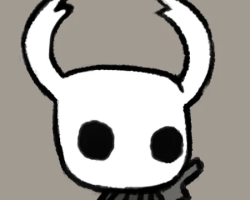
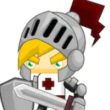
Hungry Knight is a compact action title built around a single survival objective. The player controls a knight placed in a closed arena where enemies appear continuously. The game was created by Team Cherry as an experimental project, which explains its limited scope and focus on core mechanics. There are no menus with upgrades or long-term progression; each run starts from the same conditions and depends entirely on player input.
Survival Loop And Movement
The central system is a hunger timer that constantly decreases. To stay alive, the player must defeat enemies and collect the items they drop. Movement is fast and requires constant adjustment, as standing still leads to failure. A dash ability is available and plays a key role in avoiding damage and reaching targets quickly. The loop is uninterrupted, forcing the player to maintain momentum at all times.
Enemy Interaction And Combat
Enemies are both a threat and a resource. Ignoring them is not an option, since they provide the only way to restore the hunger meter. Combat is based on close-range attacks with immediate feedback. Boss encounters act as milestones and require more controlled movement patterns. Since there is no resource storage, all actions are short-term and situational.
- Continuous hunger depletion that drives gameplay
- Enemy defeats required to sustain the character
- Boss fights as progression checkpoints
- Dash used for both offense positioning and defense
- No inventory or persistent upgrades
Session Design And Access
Hungry Knight is structured for short play sessions, where each attempt lasts only a few minutes. The map layout remains unchanged, allowing players to learn enemy positions and optimize routes. After completing the main objective, an increased difficulty mode becomes available with stricter timing constraints.
The game is often accessed through browser platforms, which makes it easy to launch without installation. Its design reflects a prototype approach, but it introduces ideas that were later developed further in Hollow Knight. The emphasis on movement, timing, and direct interaction defines the overall experience.
Advertisement













































Comments