


























Advertisement
We Gotta Go
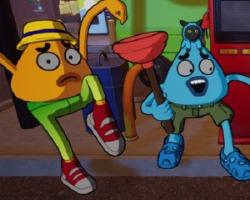
We Gotta Go is a cooperative horror game built around a single urgent objective inside a shifting interior space. Players enter a large building and must locate a specific exit point under constant time pressure. The structure is session-based, with each run resetting the environment and forcing players to adapt to new layouts and conditions.
Objective And Time Pressure
The main task is simple: find the required location before a failure condition is triggered. However, the path is not direct. Rooms are connected in unpredictable ways, and players must explore quickly while avoiding unnecessary delays. Time pressure increases steadily, which limits how long a team can search or recover from mistakes.
Movement is continuous, with minimal downtime between decisions. Players must choose whether to search additional rooms for resources or move forward without preparation. This creates a balance between speed and safety, especially in unfamiliar layouts.
Cooperative Play And Roles
We Gotta Go relies on multiplayer coordination. Each player contributes to navigation, item collection, and threat avoidance. Communication becomes essential, as splitting up can increase efficiency but also raises the risk of losing track of teammates or encountering hazards alone.
Different play approaches emerge depending on the group. Some teams move together and progress slowly, while others divide tasks to cover more ground. The game does not assign fixed roles, but situational responsibilities appear naturally during each run.
Key Gameplay Elements
The experience is defined by several interacting systems:
- Randomized room connections and pathways
- Shared objective with no individual progression
- Collectible items that assist navigation or survival
- Environmental threats that interrupt movement
- Increasing urgency that limits exploration time
These elements combine to create short but repeatable sessions where outcomes depend on coordination and decision-making rather than predefined sequences.
Session Flow And Replay Value
Each session follows a similar structure but produces different results. Players start with limited knowledge, explore the environment, and attempt to reach the objective before failure. Because layouts and conditions change, memorization is less effective than adaptation.
Replayability comes from variation and team dynamics. The same group may approach situations differently in each run, leading to new strategies and outcomes. Over time, players improve efficiency and communication rather than unlocking traditional upgrades.
Design Focus
We Gotta Go minimizes complexity in controls and interface to keep attention on navigation and timing. The environment design supports fast recognition of paths and obstacles, while procedural variation prevents predictable routes. The game’s structure emphasizes group coordination and time management as the primary challenges.
Advertisement




















































Comments